


“Innovation is the bridge between hard work and high yield,” reflects Amena Begum, a resident of Chukinagar village in Magura. Her family’s transition from a struggling traditional farming household to a model of modern agricultural success showcases the transformative power of technology-driven farming.
The Challenge: Beyond the Remittance Life
For many years, Amena’s household relied solely on the remittances sent by her husband, Ali Hossain Mondol, from abroad. However, when he returned to Bangladesh permanently, the family faced a sudden financial void. With one acre of ancestral land at their disposal, Ali began traditional vegetable cultivation. Unfortunately, due to a lack of technical expertise and outdated methods, the returns were minimal, barely covering the cost of production and leaving the family’s future uncertain.
The Turning Point: Adopting Mulching Technology
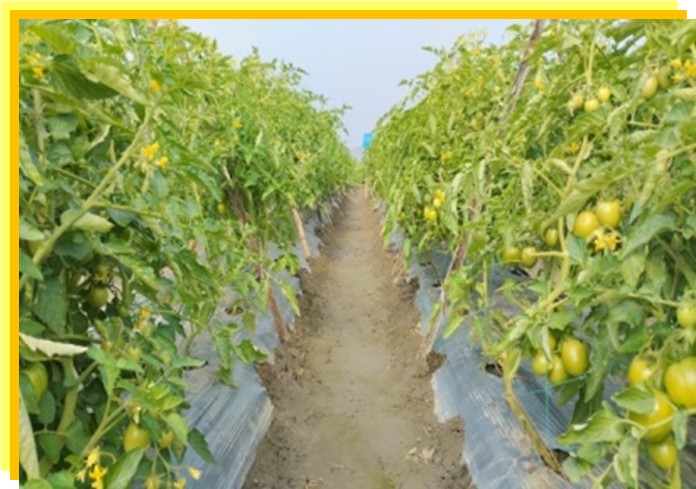
Recognizing the need for a more professional approach, Amena—a dedicated member of the Chukinagar Mohila Somity under ADI’s Amuria Branch—encouraged her husband to consult with the organization’s agricultural experts. This connection proved to be a game-changer. Ali learned about the Mulching Method, a modern technique involving the use of protective film to preserve soil moisture, maintain temperature, and suppress weed growth. With financial and technical backing from ADI, Ali became the first in his region to pilot this method on 20 decimals of land, planting high-yield Bahubali and Sultan tomato varieties.
Impact: Exceptional Yield and Regional Influence
The adoption of the mulching method yielded extraordinary results that far exceeded local traditional farming standards. Despite a severe winter spell that devastated conventional crops in neighboring fields, Ali’s mulching-protected tomatoes remained resilient, showcasing remarkable climate adaptability. This scientific approach not only drastically reduced the expenditure on fertilizers and pesticides but also maximized output; with an investment of only 40,000, Ali harvested 160 mounds of high-quality tomatoes valued at 180,000. While traditional cultivation in the region typically earns a maximum of 50,000 per bigha, Ali secured a staggering net profit of 140,000 from just 20 decimals of land. Beyond individual gain, his success has sparked an agricultural shift in Chukinagar, inspiring several neighboring farmers to adopt mulching for crops like bottle gourds and cucumbers, effectively establishing Ali as a local pioneer of modern farming.